
A friendly, practical guide to cleaning and sanitizing espresso bars using FDA-aligned steps, safe sanitizers, and easy routines your café team can follow.

Sure, your best baristas might make it look like the espresso bar runs itself – gliding between stations, steaming milk with one hand, wiping down surfaces with the other, and somehow keeping the whole workflow humming. But as operators and managers, you know that what looks effortless only works when the cleaning and sanitizing routines behind the scenes are rock-solid.
And here’s the part many cafés overlook: under the FDA Food Code, your espresso bar is officially treated as a "food service area" – the same category as kitchens, prep counters, and any surface that touches something a customer consumes, and that means it's held to the same hygiene expectations. And when staff get busy, or turnover hits, or the mid-morning rush turns into a blur, those expectations can quietly slip out of focus.
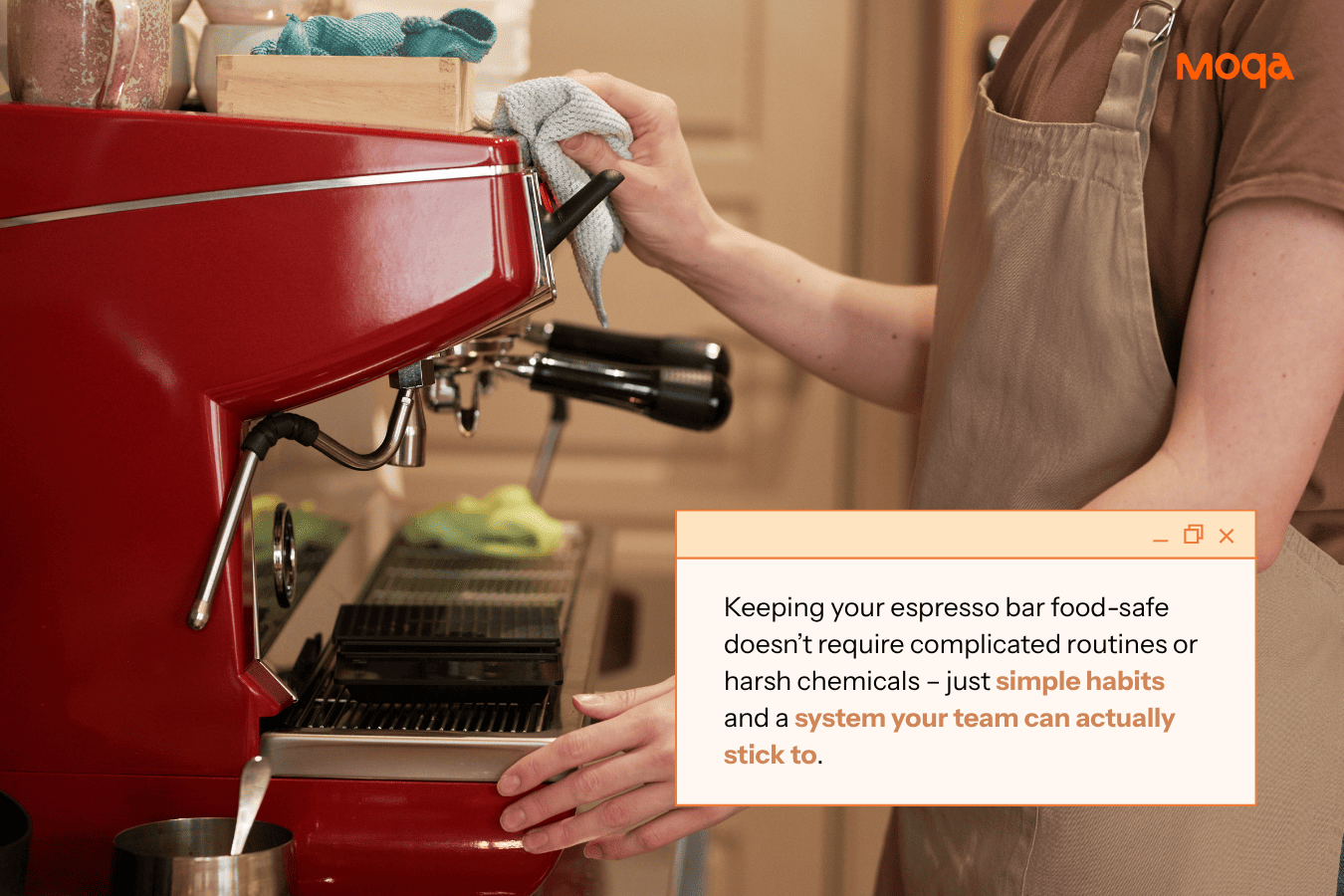
The good news? Keeping your espresso bar food-safe doesn’t require complicated routines or harsh chemicals – just simple habits and a system your team can actually stick to.
First, let’s break down what “food service area” and “food safe” really mean inside an espresso bar, and why it matters more than most people realize.
Before we dive into cleaning routines, let’s clear up one important idea:
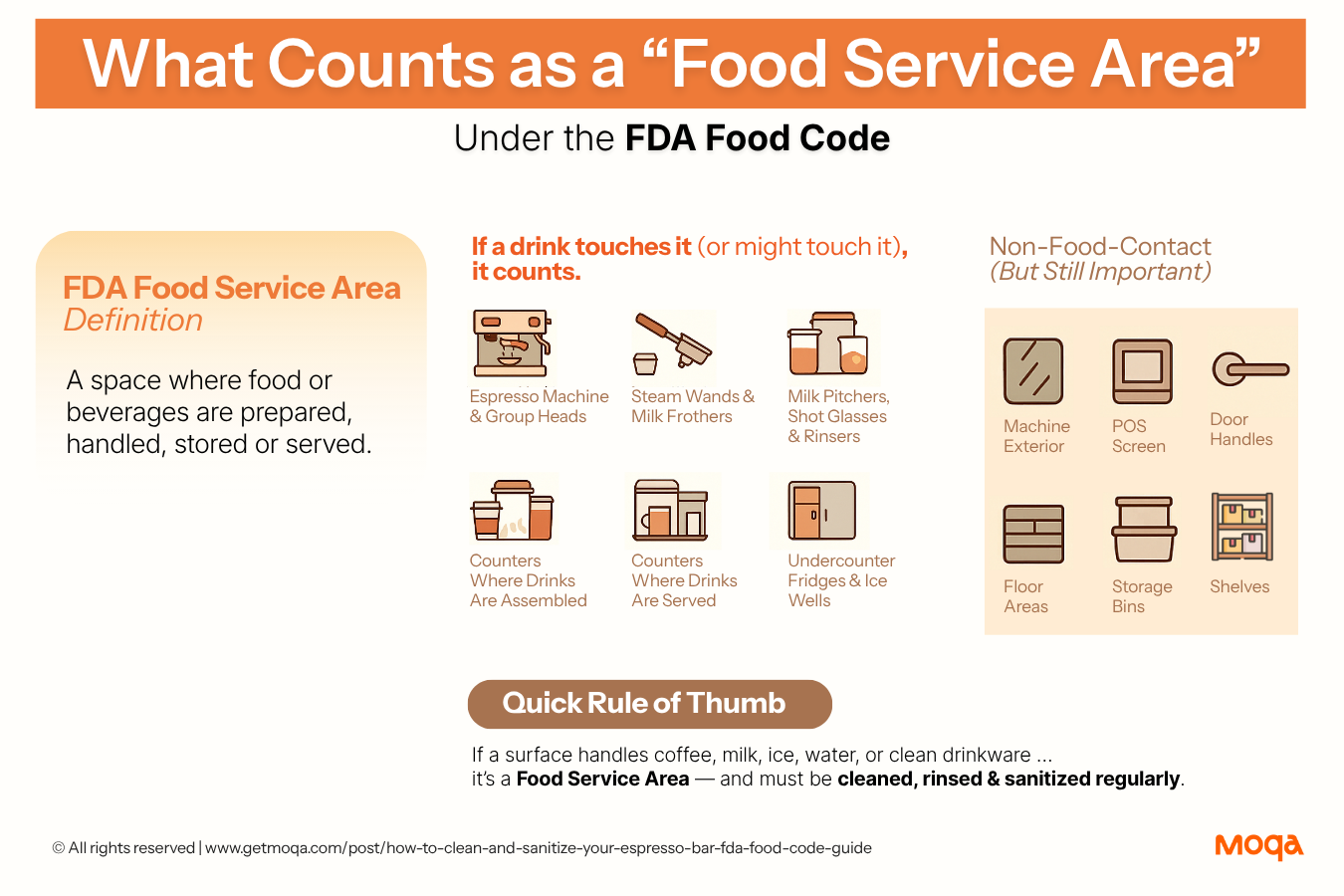
When the FDA calls something a “food service area", it simply means it’s a place where anything that a customer consumes is prepared, handled, stored or served.
That’s it.
Nothing fancy – just a formal way of saying, “If it touches food or drink, the same rules apply.”
And that’s why your espresso bar falls under this category.
Even though it feels separate from the kitchen, an espresso bar includes:
All of these fall under the FDA Food Code’s definition of a food-contact surface, meaning they must be cleaned, rinsed and sanitized the same way as a restaurant prep station.
In other words, your espresso bar isn’t just a drink station – it’s a mini food-prep zone, and the rules apply accordingly.
Now that we’ve cleared that up, let’s break down what “food-safe” actually looks like inside an espresso bar.
A food-contact surface is anything that touches something customers drink. That includes:
If it touches coffee or something that goes into coffee, it counts.
Everything else – shelves, cabinet doors, machine panels, fridge handles – are non-food-contact surfaces. Still important, but less high-risk.
People mix these up all the time, so let’s clear it up:
The FDA Food Code requires all food-contact surfaces to be washed, rinsed and sanitized regularly.
None of this is dramatic – it’s just everyday stuff. But a good system makes it manageable.
The goal of food safety inspectors is not to catch you doing something wrong – it’s to make sure customers are safe. And honestly, most of their concerns are things you’d care about anyway.
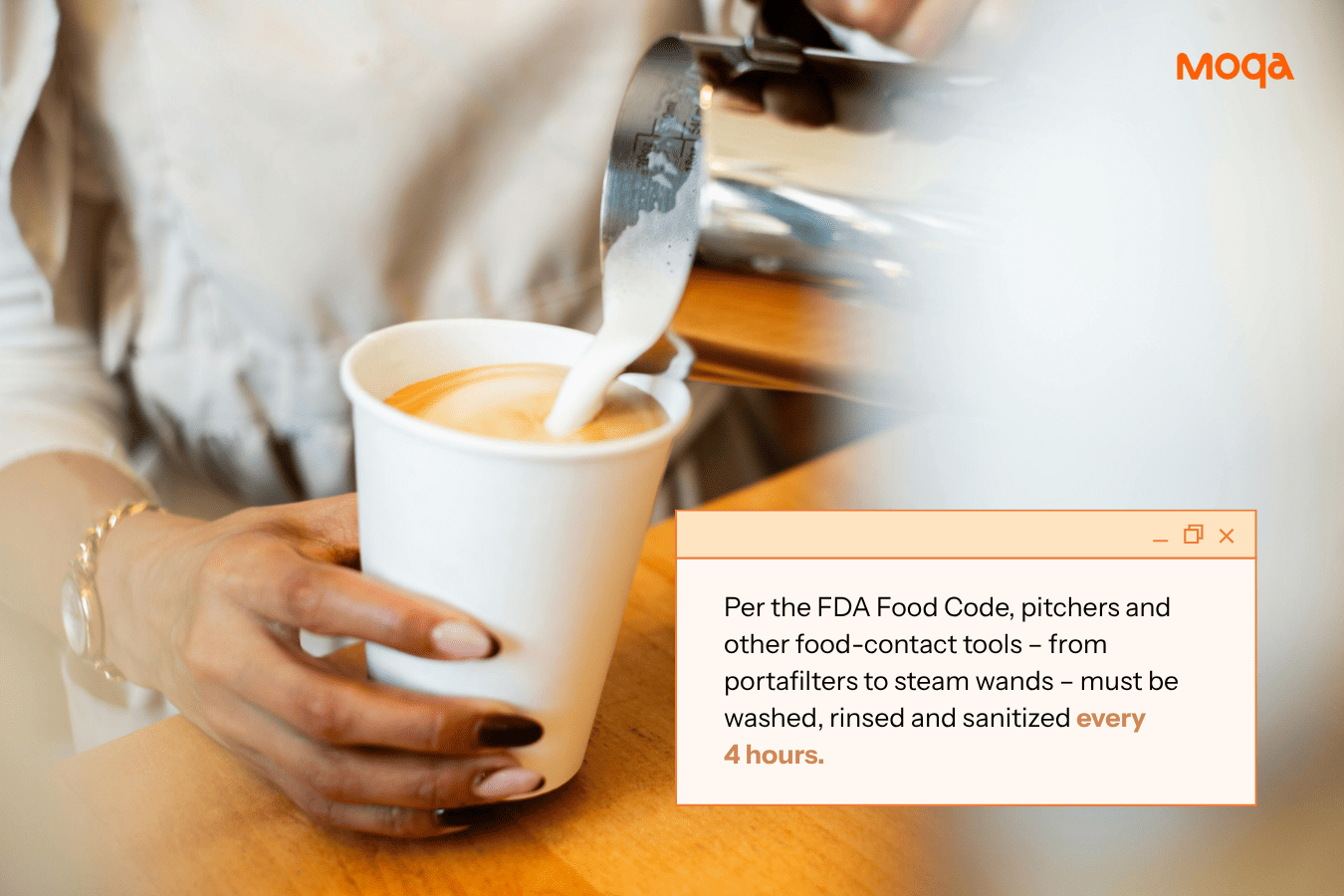
The FDA Food Code requires food-contact tools used continuously to be washed, rinsed, and sanitized every 4 hours.
This applies to:
Every food-contact surface must follow this sequence – whether in a 3-compartment sink or dishwasher.
Skipping a step breaks the safety chain.
Food-contact sanitizers must be approved and tested by the EPA (based on the Food Contact Sanitizing Solutions Model (FCSSM)) to ensure they’re both safe and effective.
Sanitizers used in cafés fall into three common categories:
A helpful summary of how sanitizers must meet Food Code requirements is explained here: GOJO Food Code Bulletin.
NSF certification ensures equipment is built to be cleanable and safe for food-contact environments.
Many espresso machines, fridges, and sinks are NSF-listed – a sign they meet sanitation design standards.
A food-safe espresso bar is all about systems, not constant vigilance.
This makes cleaning faster and prevents cross-contamination.
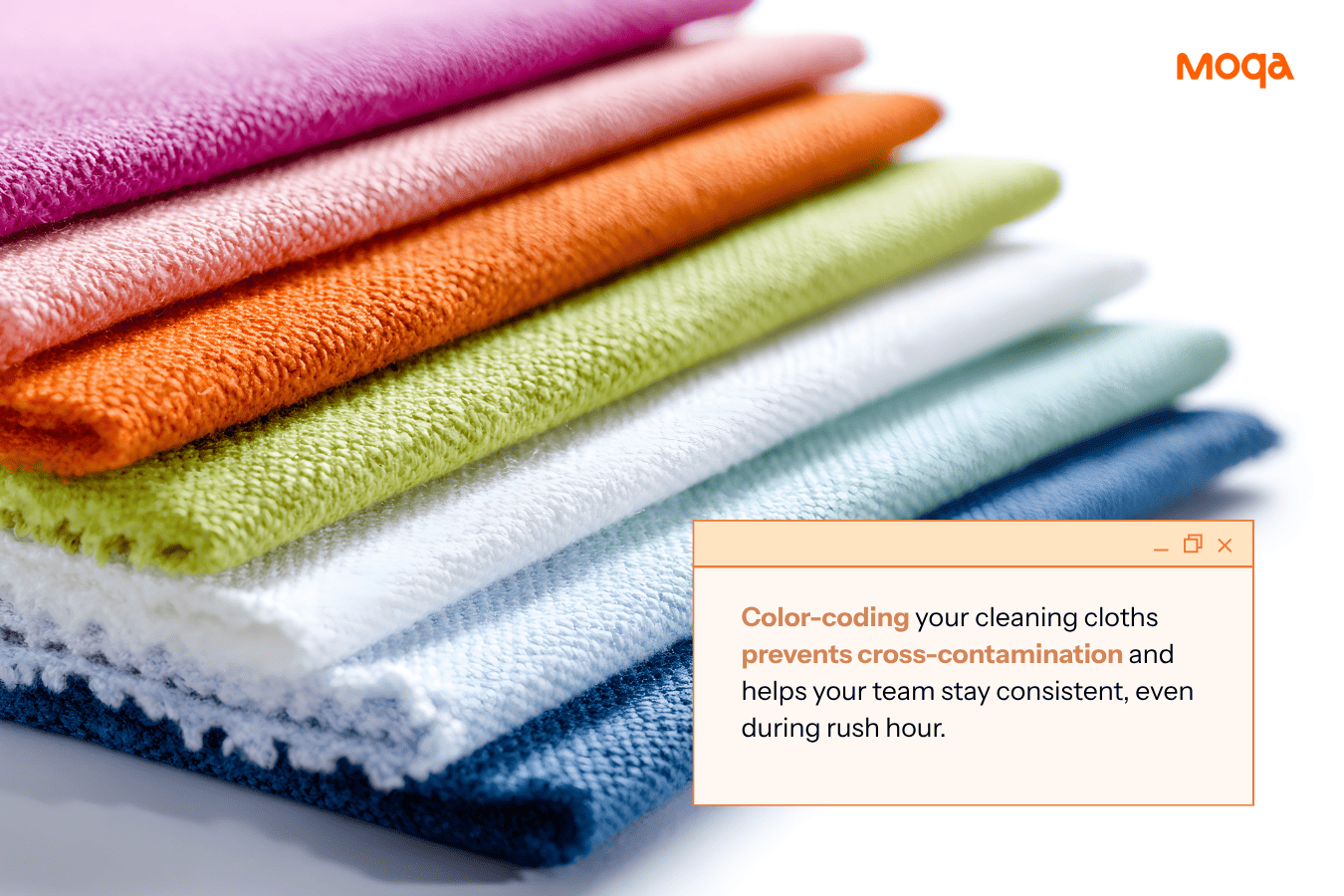
Color-coded cloths help here. No one wants the “milk cloth” wiping the counter where clean cups sit. (Yes, that happens in real life.)
And please: AVOID using scented household cleaners – they can affect flavor and damage equipment.
EPA-registered sanitizers must remain on surfaces for a specified contact time (usually 30–60 seconds) to work properly.
No wipe-and-run.
Let it sit. Let it do its job.
Let surfaces air dry after sanitizing (Do NOT towel-dry it as that will only reintroduce germs.)
Keep this routine, and you’ll always look inspection-ready.
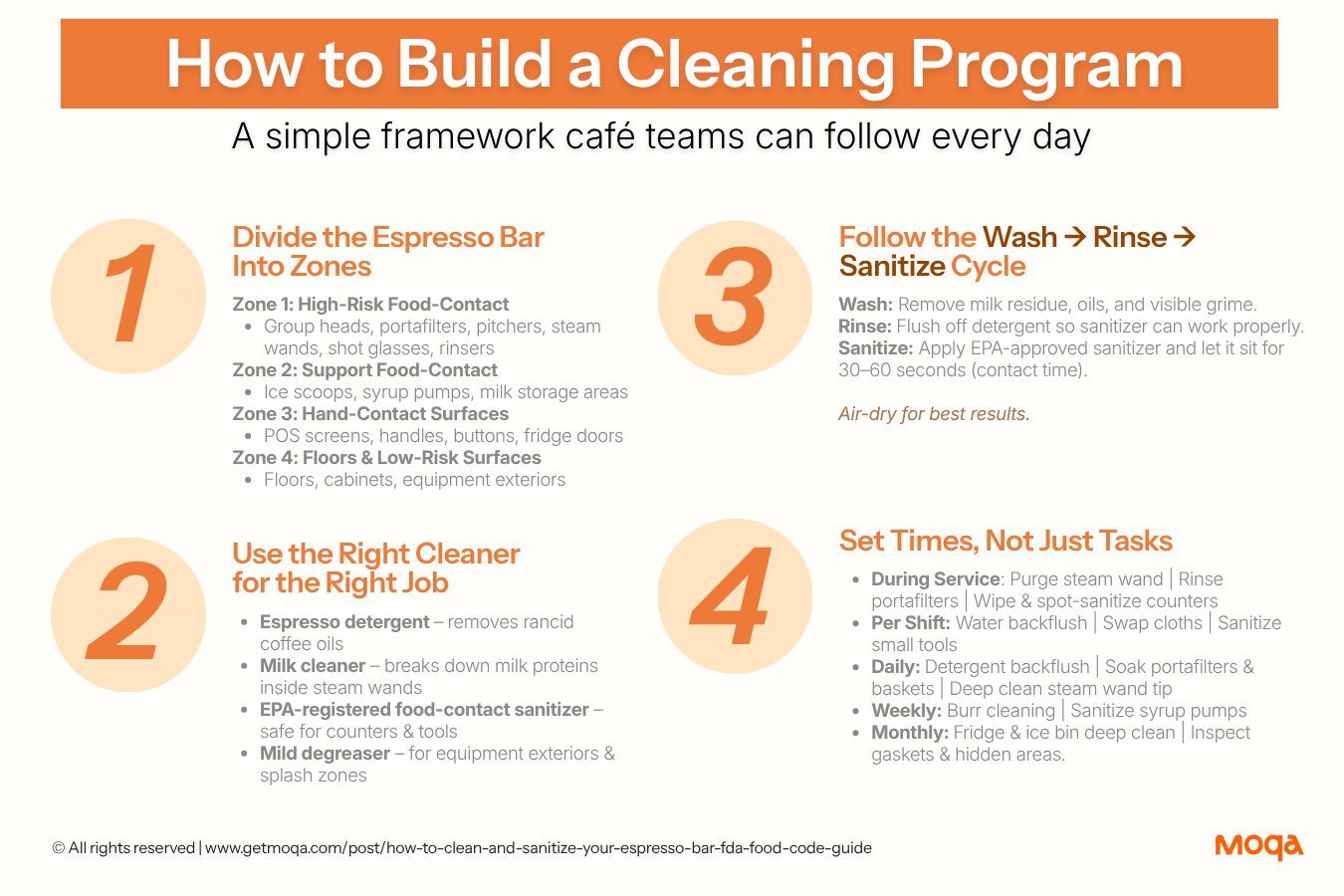
Sanitizers need 30–60 seconds of contact to work.
If it dries instantly, it didn’t sanitize.
Household cleaners smell nice … but aren’t approved for food-contact surfaces.
Cloths should be:
Look under grates, in drain trays, behind grinders, around steam wand bases.
Those spots tell the real story.
| Mistake | Why It’s a Problem | What to Do Instead |
|---|---|---|
| “Spray and wipe immediately” sanitizing | Sanitizer doesn’t have enough contact time to reduce germs to safe levels. Surfaces may look clean but aren’t actually food-safe. | Follow the label and the FDA Food Code: apply sanitizer to a clean surface and let it stay wet for the required time (usually 30–60 seconds). Air-dry for best results. |
| Using the wrong chemical on food-contact surfaces | Household cleaners or strong disinfectants may not be food-safe, can damage espresso equipment, and may leave residues that affect taste. | Use only EPA-registered food-contact sanitizers and equipment-safe espresso/milk cleaners. Keep “front-of-house” and “espresso bar” products clearly labeled. |
| Reusing the same dirty cloth everywhere | One cloth used on multiple zones can spread germs from knockbox or handles onto counters, pitchers, or steam wands — all of which are food-contact surfaces. | Color-code cloths by zone (e.g., red for knockbox, blue for counters, yellow for steam wand). Store in sanitizer between uses and replace throughout the day. |
| Ignoring hidden or “out-of-sight” areas | Build-up in steam wand tips, drip trays, gaskets, and drain lines can harbor bacteria, mold, and off-odors — all of which compromise food safety and taste. | Add hidden spots to your weekly and monthly cleaning checklist: wand tips, under grates, drain trays, gaskets, behind grinders, and shelf undersides. |
Food safety doesn’t have to be boring. Short, clear training works best – especially when your baristas are already juggling 12 things.
| Mistake | Why It’s a Problem | What to Do Instead |
|---|---|---|
| Training that focuses only on “what,” not “why” | Staff often forget steps if they don’t understand the Food Code reasons behind them. Without context, routines feel optional instead of essential. | Teach the why behind each step — contact time, cross-contamination, food-contact rules. When baristas know the purpose, consistency improves dramatically. |
| No written or accessible cleaning schedule | If cleaning tasks live only in someone’s memory, they get lost during busy rushes or staff turnover. New team members won’t know what “normal” looks like. | Document everything. Post a clear cleaning schedule and make it easy for staff to reference. Even better: digitize it in Moqa to assign tasks and track completion automatically. |
| Assuming staff will “figure it out” | Inconsistent training leads to inconsistent cleaning — which leads to cross-contamination, missed sanitizing cycles, and equipment damage. |
Use structured onboarding:
|
| No accountability or follow-up | Without verification, even well-trained staff can miss steps during peak hours or assume someone else already handled it. | Perform quick shift check-ins. Use digital checklists for mark-offs. Reward consistency and coach lapses right away. (Pro tip: Moqa makes follow-up a whole lot easier.) |
Moqa helps you turn all these routines into clear, trackable workflows your team can follow without the guesswork. Book a free demo today or contact us to know more!
Yay! You made it! That wasn’t too bad, was it?
Keeping a food-safe espresso bar doesn’t have to feel overwhelming – it just needs structure. With simple habits, the right sanitizers, and clear expectations, your team can keep the bar clean even on the wildest mornings.
And when everyone follows the same routine, you don’t just get a safer bar … you get better-tasting drinks, happier staff, and fewer surprises during inspections.
Daily – with small tasks every shift.
EPA-registered food-contact sanitizers like quats or iodophors.
Better not. It corrodes metal and may leave residue that affects taste.
Not always required legally, but many health departments expect it. NSF ensures cleanable, food-safe design.
Steam wand care, counter sanitizing, cloth rotation, backflushing, tool cleaning, and drip tray care.